

How to Keep Pool Water Crystal Clear All Summer
Quick Answer: Keeping pool water crystal clear all summer requires consistent testing, steady circulation, effective filtration, prompt debris removal, and water-care adjustments founded on actual test results. Heavy use, high temperatures, pollen, and thunderstorms can change water conditions rapidly, so small corrections made early are usually easier than waiting for the pool to turn cloudy or green.
Clear pool water is not the result of one chemical or a single weekly task. It comes from several systems working together: balanced water, dependable equipment, a clean filter, good circulation, and routine debris control. Lexington-area pool owners also have to account for South Carolina heat, humidity, pollen, and sudden summer rain, all of which can affect water quality.
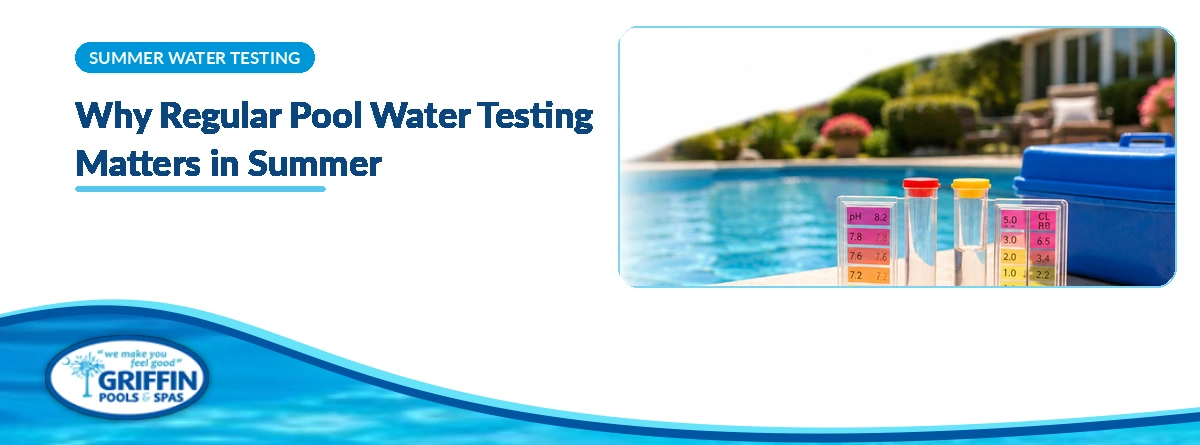
Start With Reliable Pool-Water Testing
Test before adding products, especially after heavy rain, a large gathering, or several extremely hot days. Sanitizer, pH, alkalinity, calcium balance, and other readings should be interpreted according to the pool type, surface, sanitizer system, and product or equipment manufacturer’s guidance. When home results are unclear or inconsistent, professional pool-water testing can deliver a clearer picture before you make adjustments.
Keep Water Moving Through the Filter
Circulation carries suspended particles toward the filter and helps treated water reach more of the pool. Empty skimmer and pump baskets as needed, keep return fittings unobstructed, and watch for weak flow, abnormal noises, air bubbles, or changing filter pressure. Never run a pump dry or open pressurized equipment before pressure has been safely relieved according to the manufacturer’s instructions.
Remove Leaves, Pollen, and Debris Early
Organic debris can break down in the water, consume sanitizer, stain surfaces, and make the filter work harder. Skimming, brushing, and vacuuming are basic pool-ownership tasks that help prevent buildup along steps, corners, and the waterline. During longer periods when the pool will not be used, a properly fitted pool safety cover may help reduce debris, but it does not replace active adult supervision, required barriers, locked gates, or safe pool behavior.

Do Not Treat Every Cloudy Pool the Same Way
Cloudy water may be related to filtration, circulation, water balance, heavy swimmer use, fine debris, algae growth, or equipment performance. Adding more chlorine without testing can waste product and may create a different water-balance problem. Look at recent weather, test results, filter condition, equipment operation, and how the pool has been used before deciding what needs attention.
Why This Matters
Clear water is easier to enjoy, but visibility is also an important part of responsible pool operation. Swimmers, steps, drains, and the pool floor should remain visible. Persistent cloudiness should not be ignored, especially when the cause is uncertain or water visibility is reduced.
Common Mistakes
- Adding chemicals without first testing the water and confirming the pool volume.
- Ignoring decreased circulation, a clogged basket, or a filter-pressure change.
- Letting leaves, pollen, and fine debris remain in the pool for several days.
- Mixing pool chemicals or storing incompatible products together.
Best Practices
- Test on a consistent schedule and recheck after storms, heavy use, or major adjustments.
- Follow product labels and add pool-care products separately with swimmers out of the water.
- Keep chemicals dry, ventilated, clearly labeled, and away from children and pets.
- Address equipment noises, leaks, weak flow, or repeated water problems before they worsen.
South Carolina Considerations
Midlands summers can combine high water temperatures, strong sunlight, pollen, thunderstorms, and long stretches of frequent swimming. Rain can dilute treated water and wash fine material into the pool, while hot weather can increase sanitizer demand. Check the water and equipment after major weather changes rather than assuming the previous routine is still correct.
When to Contact a Pool and Spa Professional
Professional help is appropriate when water remains cloudy after careful testing, the pump loses prime, circulation weakens, the filter behaves abnormally, equipment leaks, or the same problem keeps returning. Griffin Pools and Spas can provide water analysis, supplies, ownership guidance, and professional pool and spa repair. The company does not advertise recurring weekly pool-cleaning routes, so contact the team to confirm the right service or subsequent step for your situation.
Final Thoughts
The best summer water-care routine is consistent, observant, and based on test results rather than guesses. Keep debris under control, pay attention to circulation and filtration, and respond to changing weather or pool use before a small issue spreads. For help with confusing water results or equipment concerns, contact Griffin Pools and Spas or visit the Lexington store.
Frequently Asked Questions
How often should I test my pool water during summer?
Test on a consistent schedule and check more often after heavy rain, high swimmer use, very hot weather, or a major water-care adjustment. Follow the testing method and equipment or sanitizer manufacturer’s guidance.
Why does my pool turn cloudy after a thunderstorm?
Rain can dilute treated water and introduce pollen, soil, leaves, and other contaminants. Test the water, inspect circulation and filtration, and avoid assuming that every cloudy pool needs more chlorine.
Can poor circulation make pool water cloudy?
Yes. Weak flow can limit filtration and prevent treated water from moving evenly through the pool. A clogged basket, dirty filter, air leak, valve issue, or equipment problem may require attention.
Does a pool cover keep water clear?
A properly selected cover may reduce leaves and outdoor debris when the pool is not being used. Still, it does not replace water testing, circulation, filtration, adult supervision, required barriers, or locked gates.
When should I bring a water sample to Griffin Pools and Spas?
Bring a sample when home test results are confusing, the water repeatedly becomes cloudy, or previous adjustments have not corrected the problem. A water analysis can help identify the next appropriate step.