

Quick Answer
A bucket test compares the water level in a bucket with the water level in your pool over the same period. If the pool loses noticeably more water than the bucket under undisturbed conditions, a leak may be present and a professional inspection can help identify the cause.
Start With the Water You Cannot See Leaving
It is normal to add water to a swimming pool from time to time. In the Lexington area, warm weather, wind, and pool use can all affect the water level. But if you are reaching for the garden hose more often than usual, it is worth finding out whether that water is evaporating or escaping somewhere else.
A bucket test gives you a practical starting point. It compares water in a bucket with the water in the pool under similar weather conditions. The test cannot pinpoint a leak, but it can help you decide whether to investigate further.
How to Perform a Pool Bucket Test
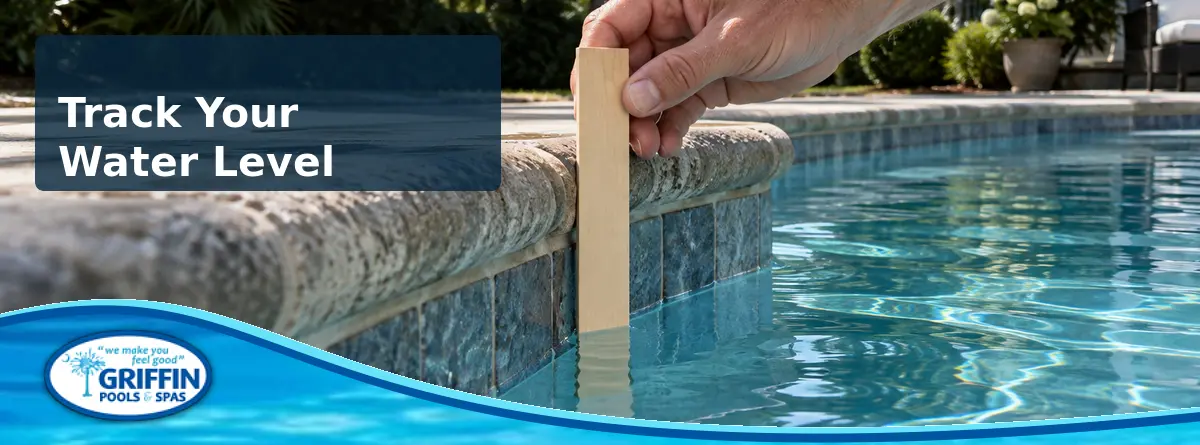
Choose a calm period without rain in the forecast. You will need a clean bucket, a marker or waterproof tape, and a ruler.
- Place the bucket securely on a submerged pool step, with its rim above the pool water. Add pool water to the bucket until the water inside is approximately level with the water outside. Make sure it cannot float away or tip over.
- Mark the water level inside the bucket. Mark the pool water level on the outside of the bucket or another fixed point where you can measure it accurately.
- Temporarily turn off any automatic pool filler. Avoid swimming, splashing, backwashing, adding water, or draining water during the test. Keep the bucket open to the air and leave it in place for about 24 hours.
- Measure how far each water level dropped. Compare the distance lost inside the bucket with the distance lost from the pool.
Record the start and finish times, weather, and pump schedule. If rain, splashing, or a water addition changes either level, repeat the test during a clearer period.
Keep Your Equipment Protected
Do not let the pool water fall below the skimmer or the level required by your equipment. If the level is dropping quickly, stop the test and contact a pool professional. Continue following the equipment manufacturer’s instructions for circulation and freeze protection; do not leave the pump off during a freeze to perform this test.
What Your Results Can Tell You
If both levels drop by roughly the same amount, evaporation is a likely explanation for much of the loss during that test. Small differences can occur because conditions in the bucket and pool are not perfectly identical.
If the pool level drops noticeably more than the bucket level, a leak is possible. Repeat the test if conditions were uncertain, and share your measurements with a pool professional. The comparison alone cannot identify whether a problem is in the pool, a fitting, equipment, or underground plumbing.
If you suspect a leak, inspect the equipment area from a safe distance for visible wet spots or dripping. Never open pressurized equipment, touch electrical components in wet conditions, or attempt repairs you are not qualified to do.
Notice When the Water Loss Happens
Useful details can make a service conversation easier. Note whether the pool loses water faster while equipment is operating, whether the level falls to a particular point, and whether you see persistent wet ground near the pool or equipment. These observations are clues, not a diagnosis.
If your technician recommends a pump-on and pump-off comparison, follow their instructions for your particular system. Turning equipment off for an extended test isn't appropriate in every situation, especially in freezing weather.
When to Call for Help
Contact a professional when the pool continues to lose more water than the bucket, the water level falls rapidly, or you notice an obvious equipment leak. Keep your notes and photos of the marked levels so you can explain what you observed. Griffin Pools & Spas provides pool and spa repair services and can discuss the next step for your equipment or pool concern.
After significant water replacement, check your water chemistry rather than assuming it remains unchanged. Griffin also offers pool water analysis to help you understand what your water needs.
Frequently Asked Questions
How long should I leave the bucket in the pool for a leak test?
About 24 hours is a useful starting point. If rain, splashing or added water affects the test, repeat it under undisturbed conditions.
Does a bucket test show where a pool is leaking?
No. It compares water loss in the pool and bucket; locating a leak may require a professional inspection or additional testing.
Should I turn off my pool’s automatic filler during the test?
Yes, temporarily, if you can do so safely. An automatic filler can replace lost water and make the comparison unreliable. Monitor the water level and restore the filler afterward.
Can I perform a bucket test during a freeze?
Follow your equipment’s freeze-protection instructions and do not turn off circulation to conduct a test during freezing conditions. Ask a pool professional about safe timing.
Sources and References
- California Pool Association — Spotting the Leak
- https://capoolassociation.com/resources/spotting-the-leak/
- All Seasons Pools — Pool Water Loss Bucket Test
- https://www.aspools.com/wp-content/uploads/2022/07/Pool-Water-Loss-24-On-Off-Bucket-Test.pdf
- Pentair — Pool Freeze Protection
- https://www.pentair.com/education-support/water-education-center/pool-and-spa-education/pool-freeze-protection.html