

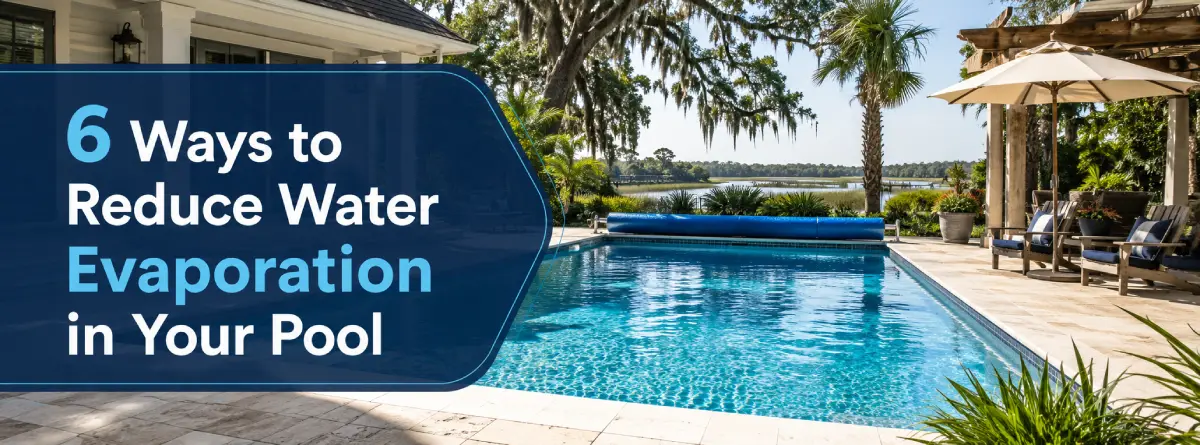
Smart Ways to Keep More Water in Your Pool
If you own a pool in Lexington, Columbia, or anywhere around the Midlands, you already know how fast summer heat can make the water level drop. Some of that loss is normal. Pools sit outside in the sun, the air gets hot, kids splash, storms roll through, and before long the water line is lower than it was a few days ago. Still, there are some simple ways to reduce pool water evaporation without making pool care feel like another full time job.
The thing is, pool water evaporation does more than waste water. It can also throw off your chemical balance, make your pump work harder if the water gets too low, and leave you wondering if you have a leak when really the pool is just losing water to heat, wind, and everyday use. You do not have to overthink it, but it helps to know what is actually causing the problem.
Here are six practical ways to reduce pool water evaporation and keep your swimming pool easier to manage through the warm South Carolina season.
1. Use a Pool Cover When the Pool Is Not in Use
A pool cover is probably the most direct way to reduce pool water evaporation. When water is exposed to sun and air all day, evaporation happens faster. Covering the pool creates a barrier that slows that process down, especially at night when warm pool water meets cooler air.
Honestly, a lot of pool owners think of covers only as something for safety or closing the pool for the season, but they can help during swim season too. Even using a cover a few nights a week can make a noticeable difference. It also helps keep leaves, pollen, and other backyard debris out of the water, which is not a bad bonus in South Carolina.
For homeowners who travel often or do not swim every day, a pool safety cover can be one of the easiest habits to build. You are not changing the whole pool setup. You are simply protecting the water you already paid to fill, treat, and maintain.
2. Watch the Water Level Closely
It sounds basic, but keeping an eye on the water level is one of the best habits for managing pool water evaporation. A normal pool can lose water from heat, wind, splash out, and backwashing. During hot stretches, especially when the pool is getting used a lot, the water level may drop faster than expected.
A good rule is to keep the water level around the middle of the skimmer opening. If it falls too low, the system may pull air instead of water, and that can put unnecessary stress on the pump. If the water is too high, the skimmer may not work as well.
Checking the water level a couple of times a week helps you catch small changes before they turn into bigger pool care problems. If you notice the water dropping unusually fast, that is when it may be time to look closer and make sure you are dealing with evaporation and not a possible pool repair issue.
3. Cut Down on Splash Out When You Can
Nobody wants to turn pool time into a list of rules. Kids are going to jump, people are going to splash, and that is part of having a pool. Still, splash out can add up. When water constantly leaves the pool and lands on the deck, grass, or patio, that lost water has to be replaced.
You do not need to take the fun out of swimming. Just be aware of the habits that waste the most water. Big cannonballs, repeated jumping near the edge, and pool games that send water over the side can all make the water level drop faster.
For family pools, it may help to create one simple rule. Keep the big splashing away from the shallow edge or steps. That alone can reduce pool water loss without making anyone feel like they are being policed. Small things matter when the same pool gets used every weekend.
4. Run Water Features Only When You Need Them
Waterfalls, fountains, spillovers, and deck jets look great. They also move water into the air, and that can increase pool water evaporation. The more water is exposed to moving air, the faster some of it can disappear, especially on hot or breezy days.
This does not mean you should never use water features. They are part of why many backyard pools feel relaxing and custom. Just avoid running them all day when nobody is outside enjoying them. Use them when you are swimming, entertaining, or relaxing by the pool, then turn them off when the backyard is quiet.
If you have automation or upgraded pool equipment, this can be even easier. Timers and controls can help you enjoy the look and sound of moving water without letting it run longer than needed. That is a small adjustment, but it can help reduce pool water evaporation over the course of a long summer.
5. Add Shade Around the Pool Area
Direct sunlight is one of the biggest reasons pool water evaporation increases during summer. You may not be able to shade the entire pool, and most people do not want to, because sun is part of the reason they enjoy swimming. Still, adding some shade around the pool area can help lower heat exposure and make the space more comfortable.
Shade sails, umbrellas, pergolas, covered seating areas, and smart landscape placement can all help. The goal is not to block the whole pool. The goal is to reduce constant sun exposure where it makes sense, especially around seating areas, shallow sections, and spots that get intense afternoon heat.
Shade also makes the backyard more usable. You get a cooler place to sit, guests stay more comfortable, and the pool area feels more finished. If you are already planning upgrades to your backyard, shade is worth thinking about as part of the bigger pool design, not just as an afterthought.
6. Keep the Pool Properly Balanced
Balanced water does not stop evaporation by itself, but it does help you avoid the chain reaction that often follows water loss. When a pool loses water and gets refilled, the chemical balance changes. Depending on your fill water, you may need to adjust chlorine, pH, alkalinity, calcium hardness, or salt levels.
This is where regular testing matters. If you are constantly adding water but not checking the chemistry, the pool can become harder to manage. You might see cloudy water, scaling, irritation, or chemicals that do not seem to last like they should.
Pool water analysis can help you understand what is happening instead of guessing. That is especially useful during heavy swim season when evaporation, rain, heat, and refill water are all affecting the pool at the same time. The water may look fine at first glance, but a test can show whether it is actually balanced.
Signs It May Be More Than Evaporation
Most pools lose some water naturally, but not every water loss problem is evaporation. Sometimes there is a leak, equipment issue, or plumbing concern that needs attention. It is worth paying attention if the pool seems to lose water very quickly even when the weather is mild or the pool is not being used much.
- The water level drops several inches in a short period
- You see wet spots around the pool, deck, or equipment area
- The pump pulls air or struggles to stay primed
- You keep adding water, but the level drops again right away
- Chemical readings change quickly after every refill
If you notice those signs, it is smart to have the pool checked. A small issue is usually easier to deal with early than after it has caused damage or wasted a lot of treated water. For help with equipment, leaks, or water issues, visit the pool and spa repair team.
A Little Prevention Makes Pool Care Easier
Reducing pool water evaporation is not about doing one huge thing. It is usually about a handful of simple habits that work together. Use a cover when it makes sense. Keep an eye on the water level. Be mindful of splash out. Run water features only when you are enjoying them. Add shade where it improves the backyard. Test the water regularly so refills do not throw everything off.
That is really the practical side of pool ownership. You do not have to chase perfection every day, but you do want to stay ahead of the small stuff. A pool that holds water better, stays balanced longer, and runs at the right level is simply easier to enjoy.
For homeowners in Lexington, Columbia, and nearby South Carolina communities, evaporation is part of the season. The good news is, with a few good habits and the right pool care support, you can protect your water, your equipment, and your weekends. To get help with pool service, water testing, covers, or equipment concerns, contact Griffin Pools and Spas.
4K Image Prompt Create a 4K photorealistic backyard pool image for a South Carolina pool care blog, showing a clean residential swimming pool in warm summer light, calm blue water, tasteful patio furniture, subtle shade from umbrellas and nearby landscaping, a neatly rolled pool cover nearby, realistic Lexington or Columbia SC suburban backyard feel, professional pool company photography style, bright but natural colors, no text on the image, no fake logos, no distorted people, no watermarks. Paste